AshleyMadison
Ashley Madison Review
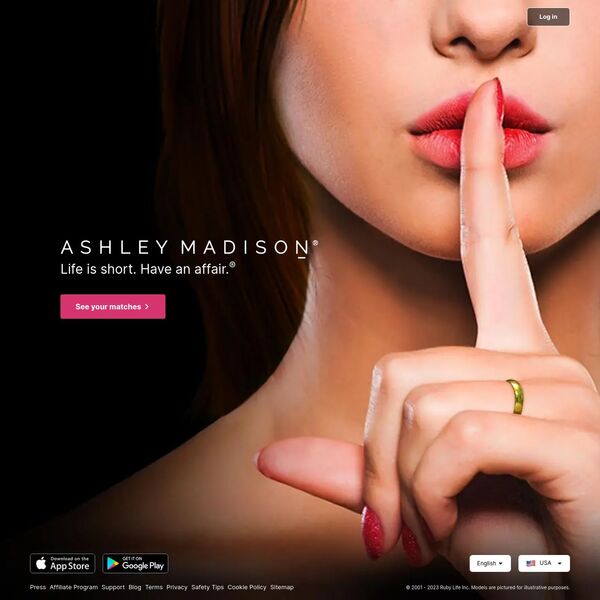
Let’s start with the obvious: you don’t come to Ashley Madison for porn. You come here because you’ve already imagined the porn, and you’d like to star in it. It’s the world’s most infamous affair site, a digital monument to bad decisions that somehow survived its own catastrophic hack. They’ve scrubbed the “Life is short. Have an affair” tagline and replaced it with the gentler “Where Desire Meets Discretion,” but the core proposition hasn’t changed. It’s a marketplace for secrets, and the price of admission is paid in paranoia and a very confusing credit system. We signed up to see if the post-scandal rebuild is a fortress of privacy or just a more expensive gamble.
Post Hack Pivot To Discreet Dating
The 2015 data breach was the kind of public implosion that should have killed any other company. Hackers dumped the personal data of roughly 36 million users, exposing names, addresses, and sexual fantasies to the world. It was a global scandal that turned the site into a punchline and a cautionary tale. The company didn’t fold; it rebranded, paid a $1.6 million FTC settlement, and hired firms like Deloitte to audit its new security setup.
The 2026 rebrand is the final stage of that apology tour. Ashley Madison is no longer just for married people. The marketing now beckons singles, the polyamorous, and anyone seeking an “alternative dating experience.” Internal data they released claims 57% of new members in 2025 were single. It’s a smart, necessary pivot to widen the net, but let’s be real. When you search for “cheating website” 2,400 times a month, you’re not looking for a polyamory support group. The user base is still fundamentally built on the original, messy premise. The site can call it “discreet dating” all it wants, but the search traffic doesn’t lie.
The numbers tell the story. The site pulls in over 2.5 million visits a month, a figure that would be impressive if it wasn’t down nearly 28% from the month before. People are still looking, but maybe with more hesitation. The average visitor sticks around for just over four minutes and clicks through about seven pages. That’s the behavior of someone browsing with one eye on the door, not settling in for a deep dive. They’re checking the place out, seeing if the coast is clear, and then most of them bounce. The top traffic source is direct visits, which means people are typing the URL directly into their browser. They know exactly what they’re looking for, and they’re not getting there via some romantic “discreet dating” Google ad. They’re searching for “cheater websites” and “adultery dating app” and landing right here.
The Credit Economy: A Pay-Per-Message Minefield
This is where the rubber meets the road, and where most men get a flat tire. Ashley Madison doesn’t use a simple monthly subscription. It runs on a credit-based economy, and the exchange rate is brutal if you don’t know what you’re doing.
For men, almost every meaningful action costs credits. Sending a message? That’s 5 credits. Sending a priority message to stand out? 35 credits. Even reading a message from someone can cost you 5 credits if you don’t have a “Preferred” subscription. Women, on the other hand, get core features for free. This asymmetric model is designed to attract more female profiles, but it creates a lopsided dynamic where men are essentially paying for the privilege of talking into a void.
The credit bundles are where they get you. They look like a deal on paper.
- Join for 100 credits: $0.49 per credit ($59 total)
- Join for 500 credits: $0.30 per credit ($169 total)
- Join for 1000 credits: $0.25 per credit ($289 total)
Our advice? Never buy the 100-credit pack. At 5 credits per message, that’s 20 introductory hellos for sixty bucks before you even get a reply. If you’re going to play, the 500 or 1000 credit bundles are the only ones that make mathematical sense. But you must disable “Automatic Credit Top-Ups” in your account settings immediately. Otherwise, when you run low, the site will automatically charge you for another 100 credits at the worst possible rate.
Then there’s the “Ashley Madison Preferred” subscription, a $29.99 to $32.99 monthly fee that’s often bundled as a “free trial” with credit purchases. It gives you perks like appearing higher in search and reading messages for free. The catch? It auto-renews. You have to manually turn off the auto-renewal, a classic dark pattern that’s led to countless user complaints. We also saw mentions of a mobile app activation fee ($18.99), though we didn’t hit that wall during our signup. The billing, while discreet (showing as “online service”), is anything but simple.
Let’s talk about the “Collect Message” fee, because it’s a perfect example of the nickel-and-diming. If you don’t have that Preferred subscription and someone sends you a message, it goes into a holding pen. To open it, you have to pay 5 credits. You’re literally paying to read your own mail. It’s the digital equivalent of a postage due stamp on a letter from a creditor. This mechanic alone explains why the site’s help center was updated “over a week ago” as of May 2026. They’re constantly fielding questions about where the hell a user’s credits went.
How Ashley Madison Sells Privacy
If the credit system is the engine, privacy is the entire chassis. Ashley Madison doesn’t just offer privacy features; it sells discretion as its core product. This is the one area where the site genuinely innovates, because for its user base, a leak isn’t just inconvenient-it’s life-wrecking.
The photo disguiser is the flagship tool. During profile setup, you can blur your face, slap a digital mask over it (we chose the bandit look), or pixelate the whole thing. It’s built directly into the uploader. You can also set photos as “Private,” only sharing the key to unlock them with users you choose. Beyond photos, there’s a “Panic Button” on the browser version that instantly switches your tab to a generic news site. The mobile app offers “Stealth Mode,” which changes its icon to something innocuous like a calculator or a weather app. Your credit card statement shows a charge from “online service,” not Ashley Madison.
We tested the desktop panic button, and it works exactly as advertised-one click and you’re reading bland headlines. These aren’t gimmicks; they’re essential utilities for the site’s purpose. In a world where dating apps are increasingly linked to social media, Ashley Madison operates like a speakeasy. You won’t find this suite of panic features on Tinder or Bumble, because their users don’t need them. Here, they’re the main selling point.
The search and filtering options are built with the same paranoid mindset. You can filter by body type, height, and ethnicity, but the real utility is in the relationship status and “what are you looking for” filters. It lets you sort the “discreetly married” from the “open relationship” from the “single and curious” with a few clicks. The UI is functional, not flashy. It looks like a corporate intranet from 2010, which is probably the point. Nothing about the design screams “sex” or “dating.” It looks like a place you’d file an insurance claim, which for its target audience, is the highest compliment.
Bots, Fakes, and the Ghost Town Question
The million-credit question: Are you talking to real people? After the 2015 breach revealed the company had used fabricated female profiles, trust is the site’s most fragile commodity. The official line, echoed by reviewers like ThePornDude, is that the bots were purged in late 2015. Our hands-on experience was mixed.
During our browsing session in a major metro area, we didn’t encounter the barrage of obvious bot messages that plague sketchier hookup apps. The profiles we saw had varied bios, specific details, and photos that looked authentic (blurred or not). However, the persistent complaint in 2026 user reviews and third-party analyses is that fake profiles and scammers are still a problem. The site’s very nature-anonymous usernames, disguised photos-is a catfish’s paradise. The gender imbalance, estimated by various sources to be anywhere from 3:1 to 5:1 male-to-female, also creates an environment where a real woman’s inbox is buried, making engagement feel sparse for paying men.
Ashley Madison claims over 60 million total users and still pulls in 2.53 million visits a month as of April 2026. It’s not a ghost town. But “users” includes every free account ever created. The active, engaged, real-person density is the variable no review can truly quantify. You’re not paying for access to 60 million people; you’re paying for the chance to find the fraction who are real, local, and interested.
Consider the traffic sources. A whopping 75% of visits come directly, meaning people are typing in the URL. Another 17% come from search, with terms like “cheating sites” and “free cheating website.” Only a minuscule 0.73% comes from social media. This isn’t a platform people are sharing with friends. It’s a solitary, secretive destination. This isolation breeds an environment where verification is nearly impossible. When everyone is hiding, how do you know who’s real? You don’t. You pay your credits and take your shot.
Mobile Experience: Discretion in Your Pocket
The official iOS and Android apps are, frankly, better than the site deserves. They’re polished, intuitive, and translate the desktop experience effectively to a smaller screen. The Stealth Mode for the app icon is a killer feature that the mobile web version can’t match. Navigating profiles, using search filters, and managing chats felt smooth during our tests.
However, this is also where the friction of the credit system is most apparent. Every “Send Message” button is a direct tap on your wallet. The apps make browsing easy, but they’re designed to funnel you toward spending. Performance was solid-no crashes or major lag-but the experience is identical to the web version, just in a more discreet, pocket-sized package. If you’re serious about using the service, the app is the way to go, purely for the icon-hiding feature alone.
The mobile experience shows the site’s core value proposition: privacy on demand. The ability to have a full-featured affair app disguised as a weather widget on your home screen is a technological solution to a profoundly human problem. It’s genius in a deeply cynical way. The app is where the theoretical risk of getting caught meets the practical need for a quick check-in. It’s optimized for that. Not for long, romantic conversations, but for the glance, the wink, the brief message sent from the parking lot. It’s built for the reality of the thing it’s selling.
Who It’s For (And Who Shouldn’t Bother)
Let’s cut through the new “inclusive” branding. Ashley Madison is for a very specific person.
It’s for someone who needs an airtight alibi built into their dating app. It’s for the person whose search history includes “how to delete my ashley madison account” 780 times a month. It’s for those in relationships seeking external connections, or singles who specifically want to date people in that complex situation. The privacy tools are legitimately best-in-class for this niche.
You should skip it entirely if you’re a single guy looking for a conventional, no-drama hookup on a budget. The credit system will bleed you dry before you get a single date. Go to Tinder or Feeld. Also skip it if you have ethical qualms about infidelity; the rebrand is a veneer. This is still the affair site, just with better encryption. Finally, if you expect a 50/50 gender ratio and instant replies, you’re in the wrong place. This is a high-cost, high-friction platform built for a high-stakes game.
Look at the top user countries: 83.5% of traffic is from the United States, followed by Canada and Great Britain. This is a primarily English-speaking, Western phenomenon. It’s for people in cultures where monogamy is the stated norm but the practice is, well, complicated. If you’re just bored in your marriage and looking for a cheap thrill, this is the most expensive way to do it. The ROI is terrible. But if you’re genuinely trapped in a dead relationship and need a connection with a layer of digital kevlar between you and disaster, this is your only real option. It’s a specialist tool for a specialist problem.
A Costly Necessary Evil For A Specific Itch
Ashley Madison is a functionally competent site that does one morally complicated thing very well: it protects your secret. The privacy features are extensive and thoughtful, the user base is massive (if imbalanced), and the post-hack security seems solid. But it monetizes desperation through a convoluted credit system filled with auto-renewal traps and punishing per-message fees. It’s less a dating site and more a financial and emotional obstacle course where the prize is a discreet conversation.
Our take draws on a forensic look at its pricing, a test of its privacy tools, and the stark reality of its 36-million-user scandal. Use it if you genuinely need the discretion it sells and you have the budget to navigate its pay-per-message economy. Treat it as a speculative investment, not a subscription. For everyone else, the free world of dating apps-and the free tubes on this very site-offer far simpler, cheaper ways to get what you want. Ashley Madison isn’t for the curious; it’s for the committed, in every sense of the word.
It survived a hack that should have been fatal because the demand it serves is bulletproof. People will always want what they’re not supposed to have, and they’ll pay a premium to hide that want. The site is a monument to that enduring, messy truth. It’s not a good deal. It’s not even a good time, most of the time. But for the specific, desperate, paranoid itch it’s designed to scratch, it remains the only game in town. Just know the price of admission is more than the credits you buy. It’s the constant low-grade anxiety that you’re one misstep away from your own personal 2015.
FAQ
Is Ashley Madison worth the money for men?
No, unless you treat it like a speculative investment in a high-stakes game. The credit system is brutal: sending a basic message costs 5 credits, and the cheapest bundle runs $0.49 per credit. That’s nearly $3 just to say “hello,” with no guarantee of a reply. The math only works if you buy the largest, most expensive credit packs and religiously avoid auto-top-ups. For a single guy looking for a simple hookup, mainstream apps are infinitely cheaper. This is a specialist tool with a specialist price tag.
How Ashley Madison Credits Work
Think of it as a pay-per-message arcade for men. Credits are the only currency for initiating contact. Sending a standard message costs 5 credits. Sending a “Priority” message to stand out costs 35. Reading an incoming message can also cost 5 credits if you don’t have a “Preferred” subscription. Women get these core features for free to attract more profiles. You buy credits in bundles: 100 for $59 (terrible rate), 500 for $169, or 1000 for $289. Our advice? Never buy the small pack and immediately disable “Automatic Credit Top-Ups” in your settings.
Are Ashley Madison Profiles Real Or Bots
The official line is that the fake “engager” bots were purged after the 2015 scandal. In our browsing, we didn’t see the obvious bot spam that plagues sketchier sites. However, the site’s entire premise—anonymous, photo-disguised profiles—is a catfish’s paradise. User complaints in 2026 still mention scammers and fakes. Combine that with a heavily skewed gender ratio (estimates range from 3:1 to 5:1 men to women), and the real, engaged person you’re looking for is a needle in a very expensive, paranoid haystack.
Ashley Madisons Best Privacy Features
This is where the site genuinely delivers for its paranoid user base. The photo disguiser lets you blur, mask, or pixelate your face during upload. The desktop site has a “Panic Button” that instantly switches your tab to a generic news site. The mobile app offers “Stealth Mode,” changing its icon to something like a calculator. Your credit card statement shows a charge from “online service,” not Ashley Madison. For people who need digital kevlar, these aren’t gimmicks—they’re essential utilities you won’t find on Tinder or Bumble.
How To Cancel Or Delete Your Account
Canceling the auto-renewing “Ashley Madison Preferred” subscription ($29.99-$32.99/month) must be done manually in your account settings before the billing cycle. It’s a classic dark pattern. To fully delete your account and data, you need to purchase a “Full Delete” service, which wipes your profile from the database. Be warned: this service was at the center of the FTC’s 2016 lawsuit, which alleged it was misleading. The current process should be more transparent, but always check the help center for the latest steps.
How Ashley Madison Survived Its Breach
Sheer, stubborn demand. The 2015 hack exposed roughly 36 million users and was a globally humiliating scandal. The company paid a $1.6 million FTC settlement, hired firms like Deloitte for security audits, and rebuilt its systems. The 2026 rebrand to “discreet dating” is the final apology tour, widening the net to singles and the polyamorous. It survived because the desire for secret connections is bulletproof. People kept coming back because, for that specific, high-risk itch, it remains the only platform built from the ground up for panic-button discretion.
Who is Ashley Madison really for in 2026?
Despite the new “inclusive” marketing, it’s for a specific type of desperate. It’s for people in relationships seeking external connections who need the suite of privacy tools. It’s for singles who specifically want to date people in that complex situation. Over 83% of its traffic comes from the United States, targeting cultures where monogamy is the public norm but practice is messy. If you’re just bored and looking for a cheap thrill, skip it—the ROI is terrible. It’s a costly, necessary evil for a specific, high-stakes problem.
 31 Best Dating Sites SITES LIKE ASHLEYMADISON